

What is LIGHT?
The Basics
The LIGHT Education Initiative is an incentive-based K-12 school program that seeks to inspire, prepare, and empower the next generation of humanitarians.
LIGHT is an acronym
for “Leadership through Innovation in Genocide and Human rights Teaching”
Creating safe schools
We’re committed to helping school districts meet their own inherent capacity to provide “safe, healthy, and supporting learning environments for all students and staff,” part of the Pennsylvania Department of Education’s vision for the creation of Safe Schools. We believe that in order for a school to be a “Safe School” it must be free from all forms of identity-based hate.
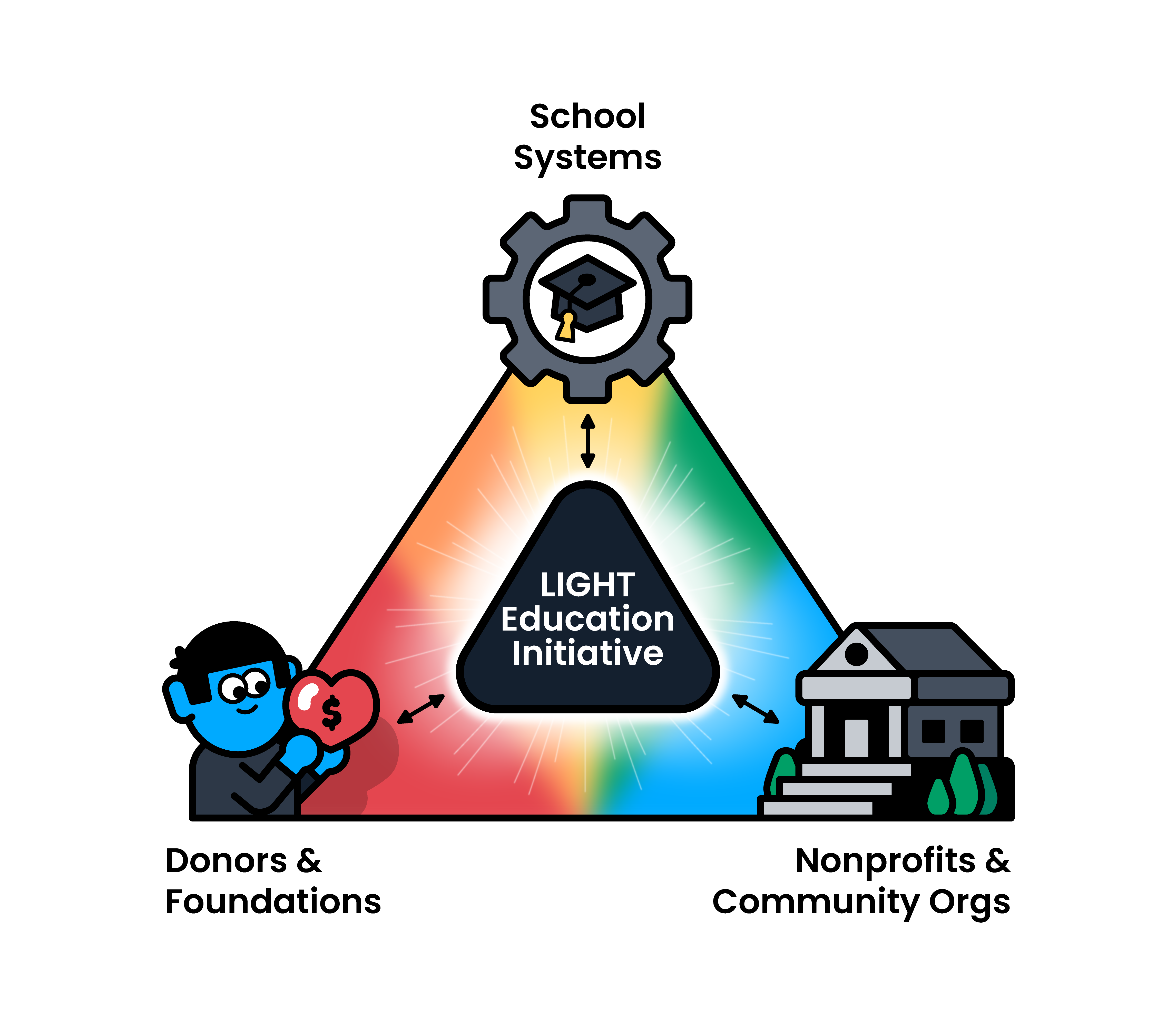

Organization
LIGHT is a program of Tree of Life, a 501(c)3 nonprofit organization, and organizationally supported by the Holocaust Center of Pittsburgh.

We're a growing movement!
Since the 2017-2018 school year, LIGHT has grown from a program in one school in Southwestern Pennsylvania to the flagship educational outreach program of Tree of Life and the Holocaust Center, a Pittsburgh institution since 1980.
Origin Story
The story of LIGHT begins with a visit from a Holocaust survivor to Shaler Area School District in the mid-2000s - a school district nearly devoid of Jewish students and teachers.
LIGHT’s Founder and Program Director, Nick Haberman, asked the Holocaust Center of Pittsburgh for help teaching his 9th-grade American History students about the Holocaust.
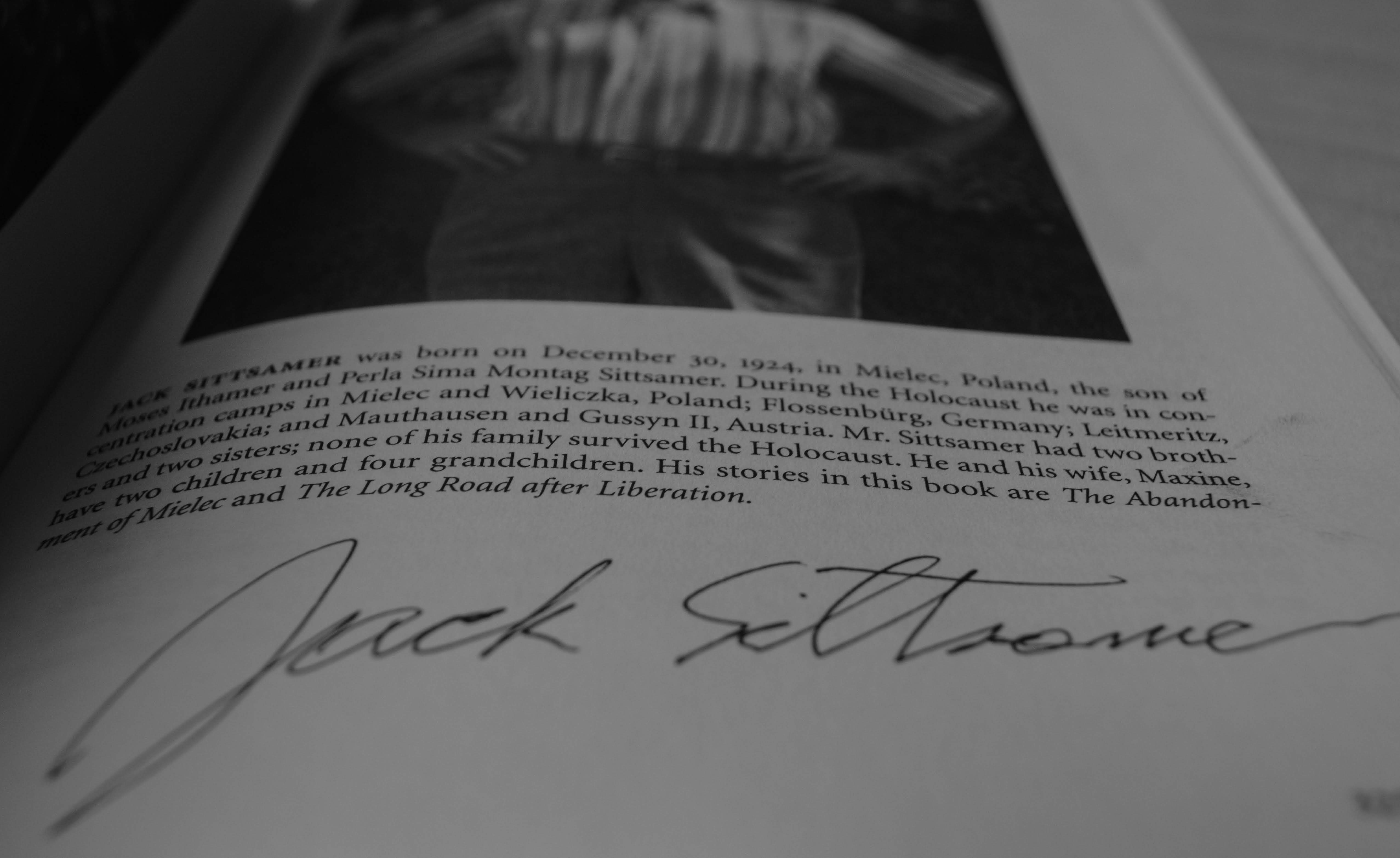
Jack Sittsamer, a survivor of six Nazi concentration camps, and the sole survivor of his family, volunteered to represent the Holocaust Center and share his story with the entire 9th grade - over 300 students and staff.
During his presentation, Nick identified that Jack inspired students with his story of loss and resilience, prepared students to identify and counter all forms of hate in their schools and communities, and empowered them to act - to transform the memory of the Holocaust into advocacy and action, and to adopt HIS story as THEIR story to share and commemorate.
In the days and weeks following Jack’s visit to Shaler Area, Nick noticed that the school climate had changed. Students had experienced a profound and transformative moment in their education, and they were motivated to create a safer school environment, especially for traditionally marginalized students.
Though LIGHT would take a decade to evolve into a formal education initiative, Jack and other Holocaust survivors lit the way for the future of Holocaust education — a future where students become young humanitarians — inspired, prepared, and empowered by Holocaust remembrance to make their schools and communities safer, kinder places for everyone.
Evolution
Between 2006 and 2018, LIGHT evolved from a classroom philosophy into a formal learning process — the LIGHT Education Initiative — with a mission and vision to transform textbook Holocaust education into Holocaust, genocide, and human rights education, remembrance, and advocacy.
LIGHT was formally created in 2018 after Nick was recognized as the Holocaust Center of Pittsburgh’s “Educator of the Year.” A former student from Nick’s Holocaust elective designed a logo and helped create a website. Shortly thereafter, the Jewish Federation of Greater Pittsburgh’s SteelTree fund provided a grant to support and spread the program through the Holocaust Center of Pittsburgh’s educator network. The Federation and the Center had become LIGHT’s first fiscal sponsors, supporters, and champions.
The Holocaust Center quickly identified LIGHT as a program that helped to embed Holocaust education within existing school systems, leveraging the assets and efforts of school districts to create safer, more compassionate schools and communities, never forgetting the importance of a strong foundation of remembrance, especially in an environment of increasing ignorance, Holocaust denial, and contemporary antisemitism.
LIGHT’s effort to create a Holocaust-inspired “humanities makerspace” led to the establishment of the first “LIGHT Center” in 2018 - a reimagined classroom, filled to the brim with historic artifacts, student artwork, educational resources, and makerspace tools. The LIGHT Center’s focus was the Holocaust, genocide, and human rights violations, and was anchored to the school’s existing curriculum and state standards, with themes of remembrance, resilience, hope, compassion, kindness, and love.
10.27.2018
On the morning of October 27th, 2018, Holocaust education was forever changed when the deadliest act of antisemitism in American history - the murder of eleven American Jews - occurred at the Tree of Life synagogue in Pittsburgh’s beloved Squirrel Hill neighborhood (the literal “Neighborhood” of Mr. Rogers).
After 10.27, the Holocaust could no longer be taught in isolation, as history had once again been allowed to repeat, and Jews in the city where LIGHT was born no longer felt safe, including Pittsburgh-based Holocaust survivors and their descendants.
Following the tragedy, Pittsburgh became famous for the “Stronger Than Hate” campaign - a response to 10.27 to protect and advocate for the Pittsburgh Jewish community, which quickly became a resilience movement inclusive of all traditionally marginalized groups. Hate would have no home in Pittsburgh.
In 2022, the new Tree of Life was born as a 501(c)3 nonprofit organization created as part of the “Remember.Rebuild.Renew” campaign to commemorate 10.27. The organization is dedicated to uprooting antisemitism and identity-based hate through an interdisciplinary model of remembrance, education, bridging, and celebration.
In tandem with the Holocaust Center of Pittsburgh, LIGHT officially joined Tree of Life as their flagship educational outreach initiative, supporting their larger mission to uproot antisemitism by “remembering those taken from us and building relationships across differences to repair our world.”
All LIGHT programs and opportunities are now built on a foundation of Holocaust remembrance AND remembrance of the eleven victims of 10.27. May their memory be a blessing to help us inspire, prepare, and empower the next generation of humanitarians.
Theory of Change


Vocabulary
CoDesign
An approach that invites end-users of a program to take an active role in the program design process, e.g. educators and students.
Humanitarian
An individual who seeks to improve people's lives and reduce suffering.
LIGHT Center
A “safe”/”brave” space within a school that functions as a hub for humanitarian resources, advocacy, opportunities, student organizations, and community outreach.
LIGHT Coordinator
An educator who has successfully completed the LIGHT Education Initiative certification program and is recognized for having the expertise and commitment to inspire, prepare, and empower the next generation of humanitarians.
LIGHT Network
A community-of-sharing maintained by LIGHT that consists of all LIGHT Coordinators, LIGHT Schools, partner organizations, and alumni.
LIGHT Program
An educational program supported by LIGHT, often with purposeful partner organizations, that provides K-12 students with age-appropriate opportunities to learn and practice humanitarianism in order to transform remembrance of past atrocities into advocacy and action for traditionally marginalized groups and contemporary victims of hate.
LIGHT School
A school that has been recognized by LIGHT for showing a continued effort and commitment to inspire, prepare, and empower the next generation of humanitarians.
PA Act 70 of 2014
The most comprehensive piece of legislation for the teaching of the Holocaust, genocide, and human rights in Pennsylvania schools, signed into law in 2014.


